Perfectionism and Creativity: Breaking Free from Your Inner Critic
Perfectionism and Creativity Can’t Coexist
Getting caught up in the headache of perfectionism is the last thing any creative wants interrupting their flow. Creativity is meant to be messy, abstract, daring, raw. It’s an act of freedom, not restriction.
And yet, as a creative person, you probably battle perfectionism anytime you sit down to make something new.
The irony of letting perfectionism sneak into your creative process is that it doesn’t reflect who you truly are or what you’re trying to accomplish. Perfectionism is built on imaginary expectations — an invisible audience’s approval — instead of your authentic creative voice.
How sad is it to think that the activities that can bring you the most joy are suffocated by notions that have nothing to do with you?
Luckily, for those of us who suffer from the need to please through perfectionism, it’s a habit that can be broken.
Read on for five simple, practical ways to challenge perfectionism and rediscover your creative flow.
1. Focus On Being Original
When you create, you’re truly building something from the ground up. Something that’s never been done before in the same way you’re doing it.
If you think of creativity as a unique form of self-expression, then the idea of working perfectionism into it doesn’t make much sense. How can you expect “perfect” if you don’t even have a preexisting ideal to compare it to?
The beauty of creation, in any medium, lies in its originality.
Perfectionism in creativity is the pursuit of something that doesn’t exist. It dampens inspiration and keeps you trapped in self-doubt. Freewriting, sketching, or journaling can help quiet the inner critic and open up space for ideas to flow.
📖 Learn more about this practice in Julia Cameron’s renowned book, The Artist’s Way.

2. Create With An Open Mind
Cast aside the notion of a desired result – or at the very least, make room for alternative possibilities. Starting a project with the expectation that everything will go to plan is a surefire way to end up discouraged.
If you learn to navigate the ups and downs of your artistic journey you’ll be more inclined to meet and overcome obstacles with more creativity.
Save space in your process for an outcome that isn’t entirely what you had in mind.
The creative process has a mind of its own, and sometimes, it knows better than we do. Give it space to roam.
3. Make Your Work Sacred
Create a safe, inner-critic-free environment around projects that are important to you.
Remember: not everyone, even those closest to you, is entitled to peek at or critique your work before it’s ready. Perfectionism and people-pleasing often team up to derail the true creative process.
When you create to impress others, you lose touch with the personal joy and purpose behind your work.
The result?
A piece of work or art that caters to external feedback instead of honoring the creative call from within.
Protect your creative energy. Let the process belong to you first — then decide when and how to share it.
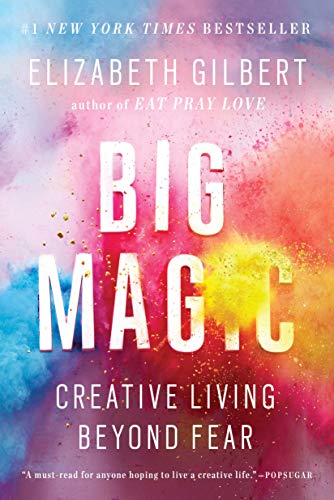
📖 Elizabeth Gilbert explores this beautifully in Big Magic: Creative Living Beyond Fear.
4. Stay In Your Own Lane
How often do you spend hours online looking for inspiration, new ideas, or a general creative boost?
If you’re like most everyone in this modern world, the answer is: too often!
When you over-consume the content of other creatives it can cause you to measure your journey and successes against theirs.
While having high standards and big dreams for your work is important, be mindful of viewing other work as ‘the ideal’ that you’re simply hoping to one day achieve. Everything, absolutely everything, looks better from the outside looking in.
But comparison is the thief of joy (and in this case, creative fulfillment).
A great mantra you can call on when you need to rebalance is “create before you consume”.
Extracting the creative energy within yourself before looking for inspiration or ideas elsewhere will make you feel less inclined to emulate or mimic their process. Instead, you can appreciate their unique work without falling into the comparison trap.
📖 For more on visualization and creative alignment, explore Creative Visualization.


5. ‘Done’ Is Better Than Perfect
Perfectionism in creativity can have someone obsessing over a minor detail for hours without making any real progress.
How frustrating and familiar is that?
When you notice yourself stalling, step away and come back with fresh eyes. If you’re working toward a deadline, remember: done speaks louder than perfect. (Because perfect doesn’t exist.)
Chances are, no one else critiques your work as harshly as you do.
As a creative perfectionist, you likely hold yourself to high standards already. Trust that your best effort creates meaningful, beautiful work — even with a few imperfections along the way.
✨ Final Thought
Creativity thrives on curiosity, not control. The moment you let go of perfection, you make space for discovery, joy, and genuine expression. Those are all of the very reasons you started creating in the first place.
So take a breath, lower the stakes, and remember: your art doesn’t need to be perfect to be powerful.
Take your creativity, and your introspective work, a step further with The Mindful Muse.
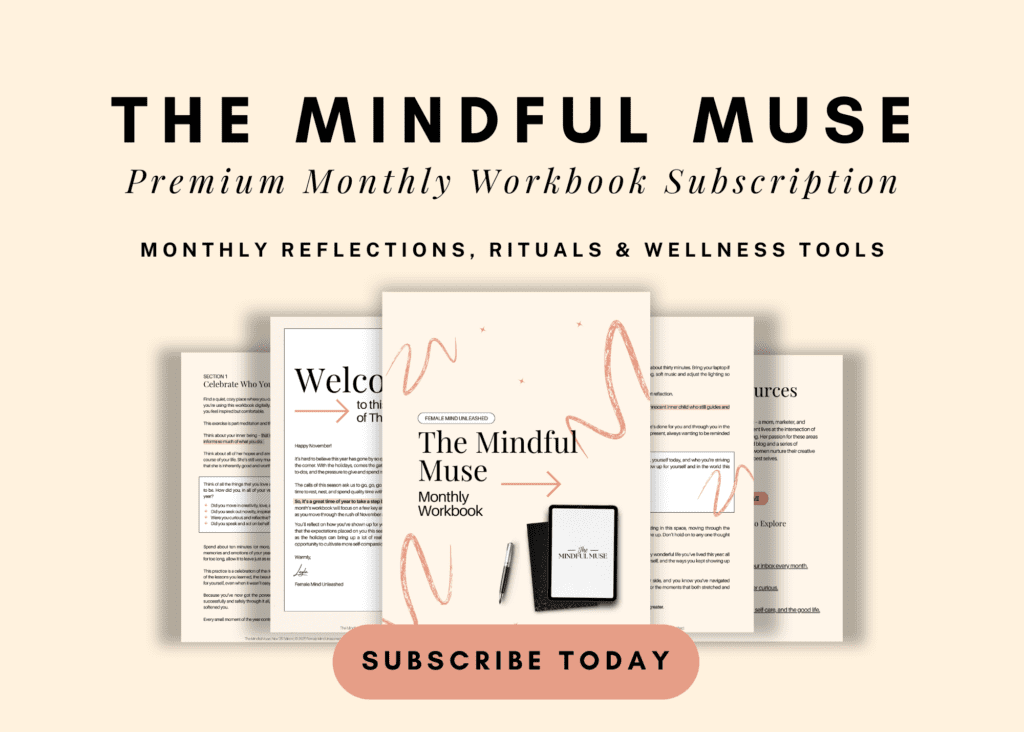
The Mindful Muse is a $9/month workbook subscription that invites you into a meaningful monthly check-in through guided reflections, journaling prompts, and intentional self-care rituals. Each issue explores themes like emotional wellbeing, personal growth, and creative renewal, so you have space to slow down, reflect, and reconnect with your inner child and your truest self.
Some links on this page are affiliate links. If you make a purchase through these links, I may earn a small commission at no extra cost to you. I only recommend products I genuinely believe add value.