How To Stop The Cycle Of Fighting In A Relationship
Fighting with someone you love can feel like an exhausting, endless uphill battle, especially when you keep having the same argument on repeat. If you’re wondering how to stop the cycle of fighting in a relationship, the key isn’t to avoid conflict altogether, but to learn how to communicate in ways that lead to resolution instead of resentment.
Why Healthy Conflict Matters
If you’re like most women, your vision of the perfect love probably didn’t include late-night arguments or miscommunication. In a perfect world, couples would always understand each other instantly.
Of course, perfection doesn’t exist — and that’s okay.
In fact, some conflict is a good sign. It means both partners feel safe expressing their needs, even when they disagree.
So while you can’t erase fights, you can learn to replace reactive habits with healthier ones. This is how you break the loop of arguing about the same issues again and again.
Breaking Old Habits
When we let people into our lives, there are no guarantees of how things will progress. The only guarantee is that you’ll have more opportunities for growth.
Learning how to fight productively requires examining your old conflict patterns: the ones modeled for you in childhood or past relationships.
If you’ve noticed the same themes surfacing during every disagreement, that’s your cue to pause and reflect. Repeating patterns signal that something deeper (like fear of rejection, control, or not feeling heard) needs your attention.
That’s exhausting, running into the same patterns again and again, isn’t it?
To confront the same lessons without learning from them?
To not have the right tools to break the habit?
With small steps, you can start learning to self-soothe, communicate needs clearly, and resolve issues without emotional damage.
Below are eight phrases to help you reset the energy and communicate in ways that stop the cycle of fighting in your relationship. (These phrases are most effective when delivered in a normal speaking voice rather than a scream, but baby steps.)

8 Phrases That Break the Cycle of Fighting
1: “I need some time to process this.”
When you’re amped up with emotions, adrenaline, and the desire to feel heard (or, ahem, be right)), it’s not uncommon to start selectively listening. You catch only the pieces that support your argument and dismiss anything that doesn’t.
But when you take a breather — whether that’s a few minutes or a few hours — you create the mental space to actually hear what’s being said. This pause helps both of you approach the situation with calmer energy, a clearer perspective, and a more balanced sense of fairness.
Processing time doesn’t mean you’re avoiding the issue altogether. But it does allow your emotions to settle so you can show up as your best self when you return to the conversation.
2: “I’m feeling overwhelmed.”
It’s not an act of defeat to admit that sometimes arguments just get away from you. When voices rise, hearts race, and emotions take over, overwhelm is a perfectly human response.
Saying “I’m feeling overwhelmed” lets your partner know you’ve hit an emotional limit and need a moment to regulate. It acts as an honest, self-aware pause button that communicates, “I care about this conversation, but I need to reset before I can continue productively.”
Leading with vulnerability can feel uncomfortable, but it’s a powerful step toward breaking the cycle of fighting. It replaces defensiveness with honesty and often encourages your partner to soften, too.
3: “I hear what you’re saying, but I’m not sure I understand.”
Sometimes, even in the middle of a heated disagreement, it helps to slow things down and reaffirm that you’re genuinely trying to understand.
This phrase can defuse tension because it shifts the focus from proving a point to understanding a perspective. It signals respect — and it buys time to process before reacting.
Even if it doesn’t calm the situation immediately, asking for clarity shows that you’re engaged and willing to meet your partner halfway. It’s a humble, grounding move that makes space for empathy to enter the room.
4: “How can I help you understand better?”
When you feel like you’re repeating yourself and still not being heard, frustration builds fast. But this question changes the energy completely. Instead of pushing your point harder, you’re inviting collaboration.
By asking, “How can I help you understand better?” you open the door for your partner to share their interpretation — which often reveals where things are getting lost in translation. Then you can clarify, rephrase, or adjust tone as needed.
This question helps turn arguments into learning opportunities, and it reminds both of you that the goal isn’t to win, but to understand.
📖 Looking to deepen your communication skills and get through to your partner? This book is a therapist-favorite.


5: “Stop. Please don’t speak to me like that.”
When an argument shifts into toxic territory like name-calling, sarcasm, contempt, or emotional withdrawal, it’s important to protect your emotional space.
Setting this kind of clear, verbal relationship boundary is an act of self-respect. It’s not about control or punishment; it’s about stating, “I want this conversation to be safe and productive for both of us.”
Deliver it calmly and firmly. This boundary helps prevent long-term resentment and teaches both partners to stay mindful of tone and language during conflict. Healthy love always includes respect, even when emotions are high.
6: “This is escalating, can we take a break?”
You know that moment when you can feel yourself reaching your limit? Your heart racing, voice rising, logic leaving? That’s when this phrase becomes your lifeline.
A short, intentional break helps you calm your nervous system so you can think clearly again. It prevents you from saying something you’ll regret and gives both of you space to self-regulate before reconnecting.
Taking a break doesn’t mean you sweep everything under the rug. Come back together with a steadier mindset and renewed intention to actually solve the problem, not just rehash it.
7: “I’d like to revisit this when I have more energy or insight.”
Not every issue has to be resolved immediately. In fact, sometimes the healthiest thing you can do is acknowledge that now isn’t the right time.
If you’re tired, emotionally drained, or distracted, you’re far less likely to handle conflict well. Pausing until you have more capacity allows you to respond with maturity instead of exhaustion.
Let your partner know you’re not walking away permanently — you’re stepping back to approach the conversation when you can both think and feel clearly. That’s the difference between avoidance and emotional intelligence.
8: “I know we can find a way to make this work for both of us.”
This phrase re-centers the relationship on teamwork. Instead of “me versus you,” it becomes “us versus the problem.”
Reassuring your partner that you believe in the relationship’s strength can instantly lower defensiveness. It shifts energy from blame to hope — and hope is often what gets lost in the middle of recurring fights.
Empathy is a catalyst for connection. When both people feel seen and heard, compromise becomes possible. A simple reminder that you’re in this together can end even the toughest argument on a loving note.
🕊️ Learn how to care for yourself and refill your emotional cup after hard conversations with the Empath’s Guide to Self-Care.

Moving Forward
Changing old patterns takes patience, especially when you’re reacting in the midst of a fight or flight response. But every calm conversation you have with your partner re-trains your brain toward safety and understanding.
Over time, you’ll notice fewer repeat arguments and more genuine connection. Conflict won’t entirely disappear, but it can stop defining your relationship.
Keep showing up with gratitude, curiosity, and the intention to grow together.
With enough practice – and patience with yourself – you can reset the entire foundation of communication with your partner.
Want To Go Deeper?
The Mindful Muse is a thoughtful investment in your wellbeing.
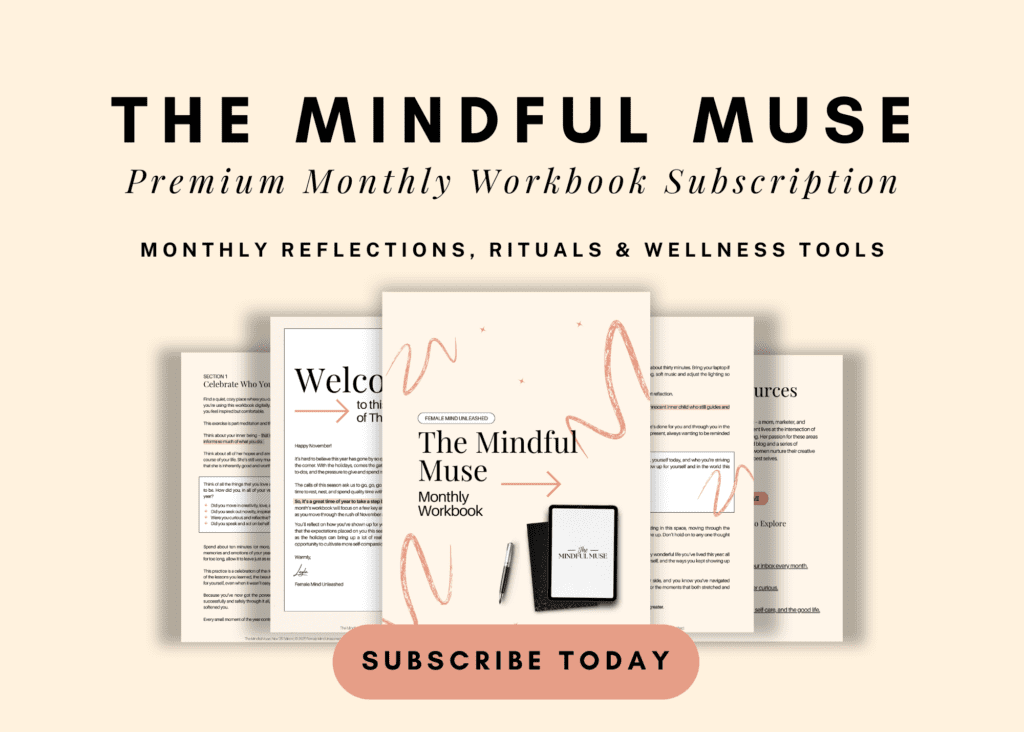
The Mindful Muse is a $9/month workbook subscription that invites you into a meaningful monthly check-in through guided reflections, journaling prompts, and intentional self-care rituals. Each issue explores themes like emotional wellbeing, personal growth, and creative renewal, so you have space to slow down, reflect, and reconnect with your inner child and your truest self.
Some links on this page are affiliate links. If you make a purchase through these links, I may earn a small commission at no extra cost to you. I only recommend products I genuinely believe add value.