How to Make Decisions When You’re Overthinking Everything
If you’ve ever searched “how to make decisions”, chances are you’re not actually confused: you’re overwhelmed.
You likely know your options. You’ve weighed the pros and cons. You’ve talked it out, journaled it through, maybe even slept on it. And yet, you still feel stuck: second-guessing yourself, looping through possibilities, waiting for an “aha!” moment that never quite lands.
It’s classic decision fatigue, emotional overload, and a loss of self-trust. And it’s incredibly common, especially among thoughtful, capable women.
Let’s talk about what’s really happening, and how to move forward with conviction and confidence.
Why Making Decisions Feels So Hard (Even Small Ones)
Most people assume decision-making should feel logical and straightforward. But in reality, decisions are emotional before they’re rational.
Here’s what often gets in the way:
- Overthinking: Trying to predict every possible outcome before acting
- Fear of regret: Worrying you’ll make the “wrong” choice and be stuck with it
- People-pleasing: Weighing how others will feel more heavily than how you feel
- Low self-trust: Doubting your ability to handle whatever happens next
When these pile up, even simple choices (like sending an email, picking an outfit, choosing a restaurant) can feel exhausting.
The problem isn’t that you don’t know how to make decisions. It’s that you’re asking your mind to do a job that requires emotional grounding, not analysis.
The Truth About “Right” vs. “Wrong” Decisions
One of the biggest myths around decision-making is the idea that there’s one perfect choice — and that if you don’t find it, everything falls apart.
In reality:
- Most decisions are course-correctable
- Very few choices are permanent
- Clarity often comes after action and conviction, not before it
Waiting for total certainty keeps you stuck in a space that doesn’t allow you to move forward.
How to Make Decisions Without Spiraling
Here’s a grounded, realistic approach you can use when you feel stuck.
1. Stop Asking “What’s the Best Choice?”
Instead, ask:
“Which option feels most aligned with who I am right now?”
This shifts the focus from fear to self-connection. It also emphasizes that the choice you do make reflects who you want to be, and where you want your life to go. All key components of intentional living.
2. Narrow It Down to Two Options
Too many choices create paralysis.
If you have five or six possibilities, intentionally narrow them down to two. Your nervous system can’t regulate around endless options. You know this if you’ve ever stood in the chip aisle at the grocery store overwhelmed by all of the options.
3. Notice Your Body’s Response
This isn’t about intuition as a mystical concept, but about awareness. As you imagine each option or outcome of your decision, notice:
- Does your body tense or relax?
- Do you feel heavier or lighter?
- More constricted or more open?
Your body often reacts before your mind catches up. Use this information to guide you forward.
4. Ask the Most Grounded Question of All
“If this doesn’t go perfectly, do I trust myself to handle it?”
This is where real confidence lives: not in perfect outcomes (because “perfect” doesn’t exist), but in self-trust.
5. Make the Decision Small
You don’t need to decide everything today.
Decide the next best step, not the entire path. Take it baby step by step as you inch forward. These small acts of momentum will build your confidence. Waiting and doubting yourself erodes it.
Rebuilding Trust in Yourself
If decision-making feels consistently hard, it’s often a sign that you’ve spent a long time:
- prioritizing others’ needs
- ignoring your own desires
- or second-guessing yourself out of habit


Self-trust is a skill. It can be rebuilt gently, intentionally, and without pressure. You can explore my book, The Empath’s Guide to Self-Care, for a more intensive look into setting boundaries, removing the need to please, and protecting your energy.
The more you practice making aligned decisions (even imperfect ones), the easier it becomes to hear your own voice again.
A Supportive Way to Practice This
If decision paralysis is something you struggle with guided reflection can help you reconnect with yourself and move forward with more confidence.
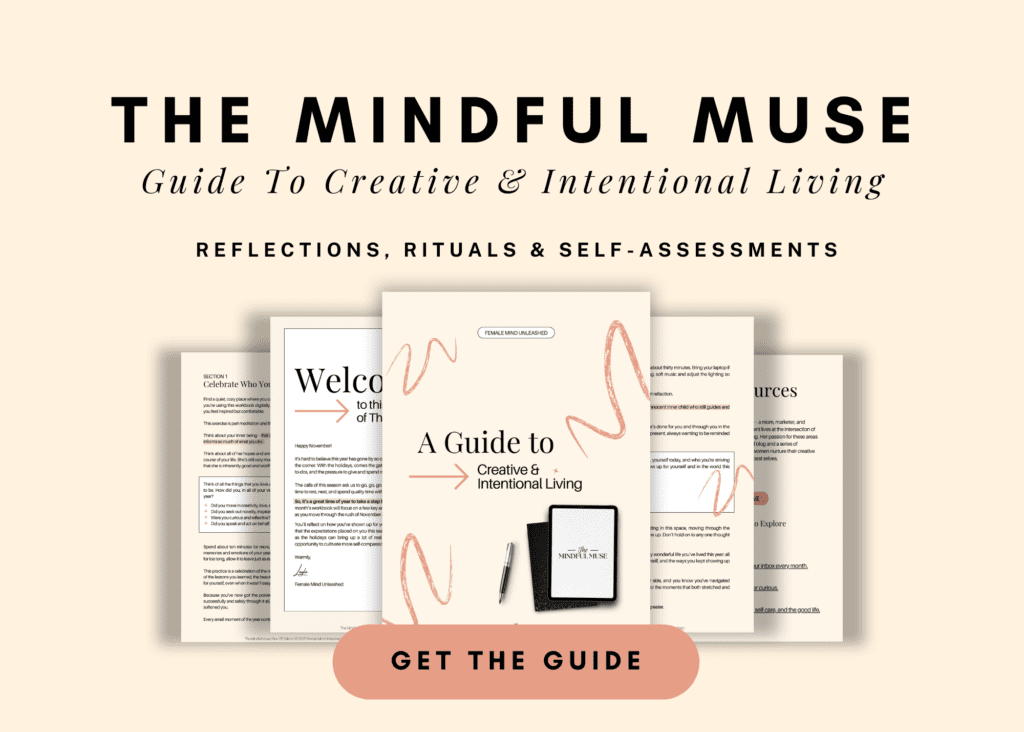
Explore The Mindful Muse workbook collection and begin with The Guide to Creative & Intentional Living: a digital workbook featuring self-assessments, journaling prompts, and simple rituals to support creative and intentional living. Discover the full Mindful Muse collection for deeper self-reflection and personal growth.
Some links on this page are affiliate links. If you make a purchase through these links, I may earn a small commission at no extra cost to you. I only recommend products I genuinely believe add value.